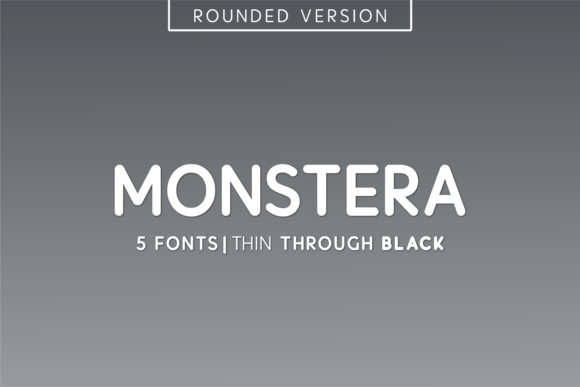
Monstera: A Detailed Look at a Versatile Sans-Serif Typeface
In the ever-expanding universe of digital typography, the search for a font that is both distinctive and adaptable is a common challenge for designers and brand builders. A typeface needs to capture attention while remaining highly functional across various media. Monstera, a sans-serif font, enters this conversation as a noteworthy option. It presents itself as a fun, quirky, and all-caps typeface, but a closer examination reveals a tool with considerable practical value for specific creative and professional applications.
Understanding the Core Design of Monstera
At its foundation, Monstera is an all-caps display typeface. This means it is designed primarily for headlines, logos, and short textual blocks where impact and style are prioritized over extended readability in body copy. Its character is defined by a blend of playful geometry and clean, modern lines. The design avoids the stark neutrality of some classic sans-serifs, introducing subtle curves and a measured amount of contrast in stroke weight. This contrast—where thicker and thinner parts of the letterform exist—is gentle, preventing the font from feeling flat or generic. The result is a typeface with personality that does not sacrifice legibility. Each letter is crafted to be instantly recognizable, even at smaller sizes, thanks to its open counters and clear letter shapes.
Practical Strengths in Real-World Application
The true test of any font lies in its performance outside of a specimen sheet. Monstera's all-caps nature and bold presence make it exceptionally well-suited for environments where first impressions are critical. In logo design, for instance, its quirky yet professional demeanor allows a brand to appear approachable and modern without seeming frivolous. A coffee shop, a boutique creative agency, or a tech startup could leverage Monstera to establish a friendly yet confident identity. The font's consistency across the full alphabet and numeral set ensures that branding materials, from business cards to storefront signage, maintain a cohesive look.
For digital applications, Monstera excels as a web heading font. Its strong vertical metrics and balanced proportions render beautifully on screen, providing a clear visual hierarchy that guides the user's eye. Unlike more ornate display fonts, it does not suffer from rendering issues on lower-resolution screens. This reliability is crucial for maintaining a professional presentation across all user devices. Furthermore, its versatility is evident in its ability to adapt to different color palettes and background textures. It holds its own against busy backgrounds while also providing a solid anchor on minimalist layouts.
Strengths for Branding and Marketing Materials
Where Monstera truly demonstrates its value is in the realm of branding and marketing collateral. Its aesthetic naturally lends itself to social media graphics, poster designs, and packaging. The font's character can help set a specific tone—whether it's energetic, friendly, or elegantly casual—without requiring complex typographic pairings. For entrepreneurs and small business owners creating their own materials, Monstera offers a professional-grade tool that is relatively straightforward to use effectively. Its all-caps design simplifies layout decisions, as there is no need to manage the visual rhythm between uppercase and lowercase letters, which can sometimes be a challenge for non-designers.
Identifying the Ideal User and Project
Determining if Monstera is the right choice depends on the project's goals and the intended audience. It is particularly beneficial for professionals and creators whose work targets a contemporary, design-aware demographic. This includes graphic designers working on client branding, marketers developing campaign visuals, bloggers seeking to elevate their site's aesthetic, and educators creating engaging presentation materials. For these users, Monstera provides a reliable way to inject personality into a project without compromising on clarity.
Conversely, it is important to recognize its appropriate context. Monstera is not designed for long-form reading. Attempting to use it for body text in articles or books would lead to fatigue and poor readability. Its strength is in impactful, short-form communication. Therefore, in a comprehensive design system, it would typically be paired with a highly legible serif or sans-serif font for body copy, creating a complementary relationship where Monstera handles the visual headlines and the companion font manages the detailed information.
Evaluating Long-Term Value and Flexibility
When considering a typeface as an investment, its longevity and adaptability are key factors. Monstera's design is rooted in contemporary trends but avoids being overly trendy, which suggests it will not feel dated quickly. Its clean lines and balanced forms provide a solid foundation that can evolve with a brand's visual identity over time. The font's flexibility across different mediums—from digital screens to print—adds to its long-term utility. A brand identity built with Monstera can seamlessly extend from a website to merchandise, maintaining visual consistency and reinforcing brand recognition.
From a usability standpoint, Monstera performs well in standard design software and web environments. Its straightforward character set makes it accessible for those with intermediate typographic knowledge. For web implementation, it functions effectively as a web font, ensuring fast loading times and consistent rendering. The practical value is clear: it offers a distinct visual voice that is both engaging and functionally sound, reducing the need for excessive design adjustments to achieve a polished result.
Professional Observations and Recommendations
In practice, using Monstera effectively involves understanding its strengths and pairing it wisely. It works best when given space to breathe, so generous leading and tracking in headlines can enhance its readability and impact. When pairing it with a body font, selecting a typeface with a contrasting but harmonious character—such as a neutral sans-serif like Lato or a classic serif like Lora—can create a dynamic and professional typographic system. It is also advisable to use Monstera for key messages and calls-to-action where its personality can have the most effect, rather than saturating an entire design with it.
One possible limitation to note is that, like many display fonts, its effectiveness can diminish if overused or applied in inappropriate contexts, such as dense informational graphics. Its quirky nature, while a strength, might not align with brands requiring a more severe or traditional aesthetic. However, for a vast range of modern applications in marketing, branding, and digital content, Monstera presents itself as a capable and stylish tool. It successfully bridges the gap between distinctive character and practical versatility, making it a worthy consideration for anyone looking to enhance their visual communication with a touch of refined playfulness.