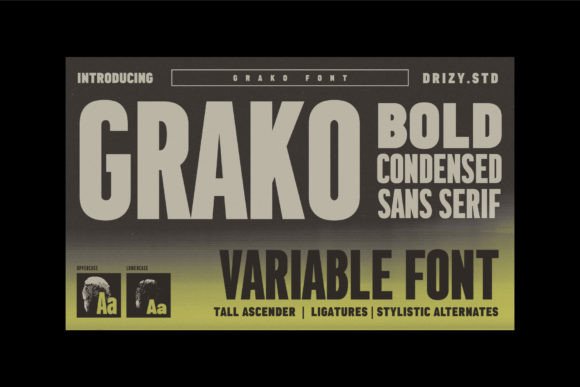
Grako: Evaluating the Bold Condensed Sans Serif Variable Font
In the landscape of modern typography, selecting the right typeface is a critical decision that influences the tone, readability, and overall impact of a design project. Grako is a specific entry in this field, defined as a bold, condensed, sans serif variable font. It is engineered for visual environments where space is at a premium but presence is required. This article provides a practical evaluation of Grako, outlining its characteristics, ideal applications, and the tradeoffs to consider when deciding if it aligns with your project needs.
Understanding Grako's Core Characteristics
Grako is not a general-purpose text typeface. Its design is intentionally narrow and heavy. The "condensed" aspect means the characters have a smaller width-to-height ratio, allowing for more words to fit on a single line. The "bold" weight ensures high visibility and contrast against backgrounds. As a variable font, Grako offers a continuous range of adjustment along its weight axis, providing designers with granular control over thickness. This technical feature allows for subtle tuning of visual density without switching font files.
The sans serif classification places it in a category of typefaces without decorative strokes at the ends of letterforms. This contributes to a clean, modern, and sometimes utilitarian aesthetic. Its design priorities are impact and efficiency of space, making it a tool for specific jobs rather than a universal solution.
When Grako Is a Strong Fit
Grako's utility is most apparent in contexts that demand high-impact communication within constrained dimensions. Consider its application in the following scenarios:
- Headlines and Titles: This is Grako's primary intended use. Its condensed form allows for longer, more descriptive headlines to be displayed prominently without requiring excessive vertical space. The bold weight ensures the title stands out against body copy and imagery.
- Poster and Banner Design: In large-format design where text must be legible from a distance, Grako's high-contrast, blocky letterforms can be effective. It is particularly suited to projects with a noir, industrial, or contemporary theme, where a strong typographic statement supports the visual narrative.
- User Interface Elements: For UI components like buttons, navigation labels, or data table headers, a condensed font can improve information density. Grako can provide clear, tappable targets while conserving valuable screen real estate, provided the text remains legible at smaller sizes.
- Branding for Specific Industries: Brands in sectors like construction, technology, automotive, or entertainment may find that Grako's assertive personality aligns with their identity. It conveys strength, stability, and modernity without unnecessary embellishment.
Benefits and Practical Considerations
Choosing Grako offers several distinct advantages. Its most significant benefit is space efficiency. Designers can fit more text into tight layouts, such as mobile app interfaces or print ads, without resorting to smaller font sizes that compromise readability. The variable font technology is another key benefit, enabling responsive and dynamic typographic adjustments with a single font file, which can improve website performance and design flexibility.
However, these benefits come with important tradeoffs that must be evaluated. The primary consideration is readability in long-form text. Grako is not designed for paragraphs, articles, or body copy. Its condensed width can cause "rivers of white space" in justified text and increase the cognitive load for readers over extended passages. Using it for anything beyond short bursts of text would likely hinder the user experience.
Another consideration is emotional tone. The font's bold, condensed nature projects a specific, strong personality. While perfect for noir crime themes or assertive branding, it may feel overly aggressive, impersonal, or out of place in projects requiring a softer, more approachable, or traditional tone, such as children's education, luxury wellness, or formal academic publishing.
Evaluating Alternatives to Grako
A balanced evaluation requires understanding when another typeface might be a better choice. If your project's needs differ from Grako's strengths, consider the following alternatives:
- For Extended Readability: If your project involves articles, blogs, or reports, a traditional serif like Merriweather or a humanist sans serif like Open Sans will offer superior legibility and reading comfort for long-form content.
- For a Softer Modern Aesthetic: If you need a contemporary look but with a friendlier vibe, rounded sans serifs such as Nunito or Poppins provide a more welcoming feel while maintaining clarity.
- For High-Density Data Display: In scenarios like financial dashboards or code editors, a specialized monospaced or ultra-condensed font like Roboto Condensed or Barlow Condensed might offer better character distinction for numerals and symbols at very small sizes.
- For Classic or Editorial Projects: Projects with a historical, literary, or formal tone would benefit from classic serifs like Garamond or Baskerville, which carry a different set of connotations and rhythms.
Making the Decision: Is Grako Right for You?
Determining whether Grako aligns with your goals involves a simple checklist of questions about your project's core requirements.
- What is the primary function of the text? If the answer is "headlines, titles, or short, impactful labels," Grako is a strong candidate. If it's "body text or long-form reading," it is not.
- What is the desired brand or project tone? Does the project call for assertive, modern, and strong? Or does it need to be approachable, classic, or delicate? Grako serves the former.
- What are the spatial constraints? Are you designing for a small mobile screen, a dense data table, or a wide billboard? Grako's condensed form solves specific spatial problems.
- Do you need variable font flexibility? If you require precise weight adjustments for responsive design or hover states, Grako's variable format is a technical advantage.
In summary, Grako is a specialized typographic tool. Its value is not in being a good font in general, but in being an excellent font for specific jobs. It excels in creating visual hierarchy and commanding attention in headlines and short text elements, particularly within design themes that benefit from its bold, condensed character. By evaluating your project's functional needs, desired tone, and technical constraints against Grako's defined strengths and limitations, you can make an informed and practical decision about its suitability for your work.