White Spring: A Practical Guide to Evaluating This Handwritten Font
In the search for the perfect typography to convey warmth and personality, designers often encounter the White Spring font. As a distinct entry in the handwritten category, it presents a specific aesthetic that can significantly influence the tone of a project. This article serves as a practical guide for evaluating whether White Spring aligns with your design objectives, exploring its characteristics, ideal applications, and potential limitations.
Understanding the Aesthetic of White Spring
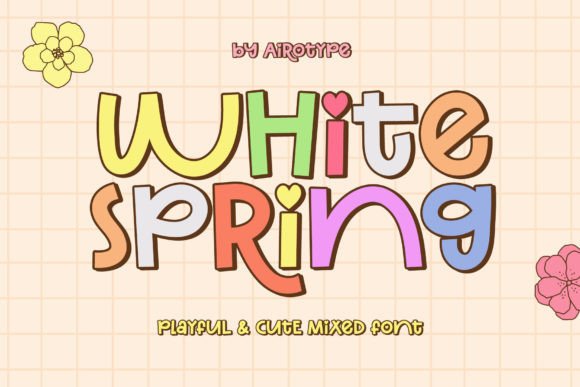
White Spring is classified as a cute and playful handwritten font. Its design philosophy centers on radiating cheer and fun, achieved through fluid strokes and a casual, approachable structure. A key feature for users to consider is its treatment of letter casing. The font is designed to allow for the mixing and matching of lowercase and uppercase characters, which can amplify its playful vibe. This characteristic offers creative flexibility, enabling a more dynamic and less rigid typographic layout than traditional, uniform fonts.
The visual impression it creates is intentionally informal and spirited. This places it in a category distinct from formal script fonts or clean sans-serifs. When evaluating White Spring, it is essential to assess whether this specific tone of cheerfulness and cuteness is appropriate for the message and audience of your project.
Scenarios Where White Spring Excels
Certain projects are natural fits for the characteristics of White Spring. Its inherent cheerfulness makes it a strong candidate for designs targeting younger audiences or aiming for a lighthearted feel. Consider it for:
- Educational and School-Related Materials: Worksheets, classroom posters, and event flyers for school functions benefit from its approachable and friendly appearance.
- Seasonal and Holiday Projects: Designs for summer events, birthday invitations, or holiday cards can leverage its fun aesthetic to evoke celebration and joy.
- Product and Merchandise Design: T-shirt graphics, sticker sheets, and sublimation prints on mugs or tote bags often thrive with playful typography that stands out.
- Crafting and DIY Projects: For digital scrapbooking, party decorations, or personalized gifts, White Spring can add a custom, handmade touch that enhances the overall craft.
In these contexts, the font’s personality directly supports the project’s goal of engaging the viewer in a positive and energetic way.
Key Considerations and Potential Tradeoffs
While White Spring has clear strengths, a balanced evaluation requires acknowledging its limitations. The very qualities that make it appealing for certain uses can present challenges in others.
Readability in Long-form Text: As a decorative handwritten font, White Spring is not optimized for body copy or large blocks of text. Its charming irregularities can cause eye strain over lengthy paragraphs. It is best used for headlines, short phrases, and callouts where its style can be appreciated without compromising readability.
Professional and Formal Contexts: The playful and cute nature of White Spring may not align with projects requiring a tone of seriousness, authority, or corporate professionalism. For legal documents, academic papers, or formal business communications, a more neutral and traditional typeface would be a more suitable choice.
Compatibility with Other Design Elements: The strong personality of White Spring means it can easily clash with other dominant design elements. If your project features complex illustrations, bold patterns, or other highly stylized fonts, integrating White Spring requires careful typographic hierarchy to avoid visual chaos. It often works best as a featured accent font rather than a competing element.
Practical Decision-Making Insights
To determine if White Spring is the right choice, start by defining the core emotion and message of your project. Ask yourself: Is the primary goal to appear fun, youthful, and energetic? If yes, White Spring is a contender. If the goal is to appear sleek, modern, or authoritative, it likely is not.
Next, consider the application. Will the text primarily be headlines and labels, or will it be extended paragraphs? For the former, it is suitable; for the latter, it is not. Finally, review your overall design ecosystem. Does White Spring complement or conflict with your color palette, imagery, and other typographic choices?
A practical step is to test it. Most font providers allow for previews. Create a mock-up of your key design element—be it an invitation header or a t-shirt graphic—using White Spring. This real-world preview is the most effective way to judge if its aesthetic truly fits your vision.
When to Explore Alternatives
If you appreciate the handwritten style but find White Spring’s specific playfulness too intense, consider exploring other handwritten fonts that offer a more subdued or elegant casualness. Fonts with smoother connections or less exaggerated letterforms might provide a better balance.
For projects that require high legibility at small sizes, such as mobile app interfaces or detailed product packaging, a clean sans-serif or a humanist font would be a more functional choice. Similarly, if your design demands a vintage, rustic, or grunge aesthetic, a different category of typeface would be more appropriate.
Conclusion
White Spring is a specialized tool within a designer’s toolkit. Its value is not universal but is exceptionally high within its niche. It effectively communicates cheer and cuteness for school designs, holiday invitations, summer themes, and crafting projects. The decision to use it should be guided by a clear understanding of your project’s tone, audience, and practical requirements. By weighing its playful strengths against its contextual limitations, you can make an informed choice that enhances your design’s communication and appeal. Ultimately, aligning the font’s inherent personality with your project’s goals is the key to successful typography.